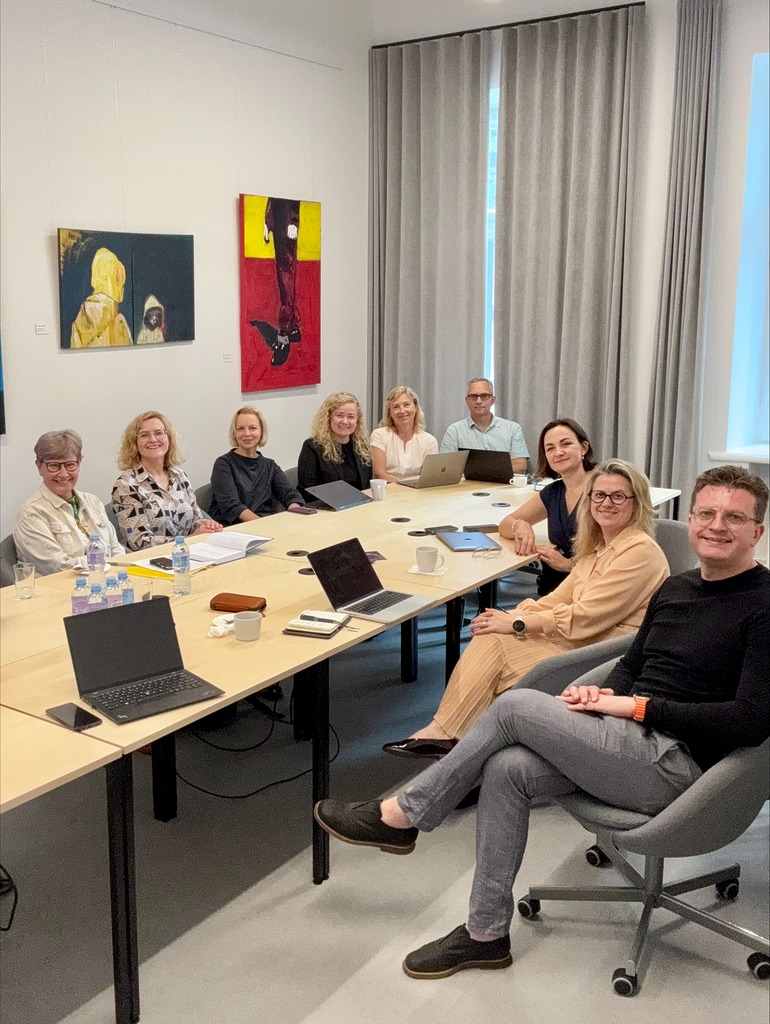


An international team of researchers from Kaunas University of Technology (KTU) and the University of Jyväskylä (JYU) gathered today for a meeting to discuss the progress made during the first year of the project – Research on Petty Corruption in the Lithuanian Healthcare Sector (PULSE), project leader Prof. Dr. Raminta Pučėtaitė. The project is developing an evidence-based, multi-level model of petty corruption in healthcare. The project will run from September 2, 2024, to August 31, 2027, and is funded by the Lithuanian Science Council ( Agreement No. S-MIP-24-25).
The working session reviewed the main stages and expected results, and discussed the progress of the project implementation. Team members discussed (i) the results of a systematic literature review (Anna-Maija Lämsä), (ii) the methodology for investigating the decision-making and moral emotions of healthcare professionals and patients in situations of petty corruption (Raminta Pučėtaitė), and (iii) the experimental design based on eye-tracking (Laura Daniusevičiūtė-Brazaitė). A review of policy documents was also presented (Vytautas Valentinavičius), the project website was reviewed and the communication strategy was discussed (Jolanta Vaičiūnienė), and finally, the work for the coming year was agreed upon by the group.
Today’s discussions are in line with PULSE’s objectives: to develop a map describing the nature of petty corruption in healthcare; to examine the roles of ethics committees and patient organizations; to identify gaps in the implementation of national policies on healthcare quality and efficiency in the area of corruption prevention; to learn from Finnish best practices; and to develop evidence-based recommendations for policymakers and healthcare managers. These objectives guide the project’s integrated micro-meso-macro level approach and expected social impact, strengthening integrity-based management and policy decisions.
Looking ahead, the team has planned work for 2025–2026, including interview protocols for specialists and patients, focus groups with ethics and patient advocacy bodies, collection of experimental data, and preparatory work for co-creation workshops and interviews with policy makers.