
The Role of Digitalization in Healthcare -
PULSE project Senior Researcher Prof. Anna-Maija Lämsä discusses the role of digitalization in reducing petty corruption in healthcare.
As part of the project Petty Corruption Unveiling in the Lithuanian Healthcare Sector: Exploring Individual Choices, Institutional Patterns, and Anticorruption Policy Perspectives (PULSE), funded by the Research Council of Lithuania (No. S-MIP-24-25), one component of the project examines Finnish practices and approaches aimed at preventing and reducing petty corruption in healthcare.
To gain insights into this topic, this blog draws on website information, literature and discussions with seven professionals and experts concerning the topic in Finland. To protect participants’ anonymity, each participant is identified only by a letter (A-G). Information on the timing of the discussions and the participants’ professional backgrounds is provided at the end of this blog post.
An illustrative case as a point of departure
Recently, a Finnish newspaper (Iso lääkemäärä voi johtaa valvontaviraston toimiin, 2025; Lääkäri kiisti törkeän huumausainerikoksen, 2025) reported a case in which a physician was accused of taking bribes from patients who sought prescriptions for drugs. In addition to the physician, 20 patients were also charged. The physician allegedly prescribed partly dangerous drugs to these patients, who then sold them on the black market. In return, the physician reportedly received a share of the profits from the sales. Some of the drugs were returned to the physician for her personal use, and patients also made direct, face-to-face payments. The case also raised concerns that the physician may have falsified patient records to mislead authorities, particularly the agency which is responsible for permits, supervision and guidance on legality in the healthcare and social welfare services sector.
The physician defended her actions by portraying herself as compassionate and long-suffering in her dealings with patients who did not receive help from elsewhere. She told investigators that she had recently been a victim of domestic violence and, struggling with anxiety afterward, began using cannabis on the advice of a neighbor. According to her account, patients threatened her, leaving her feeling trapped and unable to end relationships. While the value of any single prescription may have appeared small, prosecutors estimate that over the course of several years she issued prescriptions totaling more than €1.5 million.
The case illustrates the notion of the slippery road in corruption literature (e.g., Ashforth & Anand, 2003; Argandoña, 2005; de Sousa & Coroado, 2024), whereby seemingly minor corrupt acts can gradually escalate in scale, making it increasingly difficult to stop the process. In justifying her behavior, the physician employed various mechanisms of moral disengagement (Bandura, 2016; De Cremer & Vandekerckhove, 2017), including minimizing her responsibility, downplaying harmful consequences, appealing to her desperate position in life, and portraying herself as a victim and a helper.
Aim setting
This blog post, inspired by the illustrative case of petty corrupt behavior in the relationship between a physician and her patients described above, introduces Kanta Services as an example of how digitalization can contribute to transparency and accountability in healthcare and potentially help reveal and prevent unethical behavior. The Kanta Services have been developed since 2010 as a nationwide digital infrastructure covering healthcare and social welfare services across Finland (Kanta). Against this background, the aim of this contribution is:
- to provide an overview of Finland’s healthcare system;
- to introduce and discuss the main principles of the Kanta Services;
- to highlight one important component of the Kanta Services, namely the electronic prescription service; and
- to highlight some of the challenges associated with digitalization, as identified by the Finnish respondents with whom I discussed the topic.
From the perspective of petty corruption, a key strength of the Kanta Services lies in their capacity to enhance transparency, traceability, and accountability in interactions among healthcare professionals, citizens, patients, public authorities and other organizations. These characteristics are widely recognized as important elements of effective anti-corruption efforts (e.g., Maciel, 2024; Transparency International; Torsello, 2024). Transparency is particularly relevant in healthcare, where interactions between professionals and patients often involve information asymmetries and considerable professional discretion (Pilnick & Dingwall, 2011). Making decisions, transactions, and the use of healthcare resources more visible can strengthen opportunities for scrutiny and reduce the space in which inappropriate or informal practices can remain undetected.
Recent research in healthcare likewise suggests that transparency at the individual, organizational, and societal levels can contribute to corruption prevention by making healthcare processes, resource use, and decision-making more visible and open to scrutiny, as shown, for example, in the studies by Gholami et al. (2024) and Jalali et al. (2026). Digitalization can support this process by standardizing information flows, creating electronic records, and improving the traceability of actions and transactions. All respondents with whom I discussed the issue (A–G) similarly emphasized that digitalization can strengthen transparency, standardize information flows, and improve traceability within healthcare.
A look at the Finnish healthcare system
The Finnish health care system is primarily based on publicly funded services financed through taxation. While the public sector plays a central role, health services are also delivered by private providers. In addition, numerous non-governmental organizations in Finland contribute to the system by offering a range of services. The Ministry of Social Affairs and Health oversees national health and social policy and is responsible for drafting related legislation (Health Services).
At the beginning of 2023, responsibility for organizing healthcare and social welfare services shifted from municipalities and joint municipal authorities to newly established wellbeing services regions (hyvinvointialueet). From 2026, licensing and supervision in these sectors were consolidated under a single national authority, the Finnish Supervisory Agency, bringing together the responsibilities of several former regulatory bodies. This reform seeks to harmonize supervisory practices, improve cooperation and promote equality, effectiveness, and legal protection nationwide.
Evidence from the Baltic States, although somewhat dated, suggests that organizational complexity in healthcare and inefficient cooperation between healthcare actors can create conditions conducive to unofficial payments and contribute to mistrust in the healthcare system (Cockcroft et al., 2008). Their findings highlight the importance of coordinated organizational structures and transparent cooperation among healthcare actors in reducing opportunities for corrupt behavior. Coordination is particularly important in healthcare because services involve multiple professionals, organizations, administrative levels, and regulatory actors (Glynn, 2022; Sommersguter-Reichmann & Reichmann, 2024). Where responsibilities and information are fragmented, gaps in oversight and accountability may emerge, whereas effective coordination can support more consistent procedures, clearer responsibilities, and greater transparency (OECD Health Studies, 2020).
Consequently, the current Finnish healthcare and social welfare system seeks to strengthen coordination and integration across multiple actors, supported by extensive digitalization. Together, organizational coordination and digital infrastructure can facilitate the flow of information across institutional boundaries, thereby aiming to support efficiency, equity, legal protection, and transparency.
Cases involving cash payments between patients and physicians, such as the illustrative example above, are extremely rare in Finland, which may partly explain the media attention it received. As B, E and F noted, it would be highly unusual for a patient to offer an informal payment before or after a consultation or treatment. However, no community is entirely free from unethical behaviour. What matters is having effective mechanisms to detect and address such acts. This raises the question of which healthcare strategies and systems can help uncover and prevent petty corrupt behavior. In this context, digitalization, including Finland’s Kanta Services, offers one potential means of addressing this challenge.
What are the Kanta Services?
As a nationwide digital infrastructure, the Kanta Services store a wide range of health, social welfare and prescription data, including records of healthcare visits and treatment, laboratory and imaging results, vaccinations, medical certificates, referrals, treatment plans and electronic prescriptions. Pharmacies also record information on the dispensing of prescribed medicines. (Kanta.) As a whole, the Kanta Services include a number of digital services (the list in Table 1 is based on the website of Kanta).
Table 1. The services of Kanta (see more details, Kanta)
| Service | Key Contents |
| MyKanta | A nationwide online service in which healthcare and social service clients can view their health care and social welfare data |
| Patient Data Repository | Patient data stored and available in Kanta by a healthcare professional |
| Client Data Repository for Social Welfare Services | Social welfare client data stored and available to social welfare professionals |
| Prescription service | Service to store and manage information about prescriptions and the dispensing of medication |
| Pharmaceutical Database | A service containing harmonized and up-to-date information about medicines and medicinal substances for the purpose of prescribing and dispensing medicines. |
| Imaging Data Repository | A service where imaging material generated in connection with a patient’s care is stored. |
| Certificates and statements | Electronic medical certificates and reports can be stored in Kanta; the data can also be utilized by organizations outside the health care services at the patients’ request |
| Archiving of old patient data | A service to store patient data that was created prior to joining Kanta |
| Query and forwarding service | Certificates and statements stored in the Kanta Services transferred to certain operators outside the healthcare sector through the query and forwarding servicesferred to certain operators outside the healthcare sector through the query and forwarding service |
| Kanta PHR | Not in progress currently |
| Patient data interface | Patient data recorded by other service providers will also be visible in a client’s digital health service |
| Kelain | This service may be discontinued soon |
| Kanta data platform (Secondary use of Kanta data) | The data stored in the Kanta Services is processed for research, statistics, and authorities |
Used by a number of actors, such as citizens, public and private healthcare and social services providers and pharmacies, Kanta integrates multiple digital services into everyday professional practice. As D notes, healthcare professionals and organizations have mostly moved away from the previous paper-based system and are now required to use Kanta Services comprehensively. C metaphorically describes Kanta as an “open ocean” of relevant information that supports clinical work, facilitates information flows, and enhances collaboration among healthcare professionals.
In the Kanta Services, patient and client information generated through healthcare and social services is stored centrally and kept up to date, allowing authorized professionals timely access. Access is restricted to personnel directly involved in a client’s care, supporting confidentiality and accountability. As D noted, in addition to substantive healthcare and social services information, Kanta generates log data on the processing of client and patient information, making it possible to establish who has accessed or processed data and on what basis. Citizens can likewise access their health information through the MyKanta online portal, increasing transparency and giving individuals greater control over their data.
The Kanta Services are widely used by healthcare and social welfare actors as well as by the Finnish population. Figure 1 shows Kanta users in 2025.
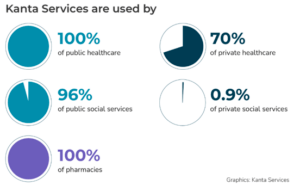
Figure 1. Kanta users in 2025 (source: Statistics/Kanta Services)
According to D, in the future, client and patient data will be exchanged between social welfare and healthcare through the Kanta Services. Legislation is moving towards greater interoperability between social welfare and healthcare: under the Client Data Act, the Kanta Services must support the disclosure of patient and client data between social welfare and healthcare no later than 1 March 2027. As a result of this change, two new consent mechanisms for disclosing data will be introduced in social welfare and healthcare:
- consent to disclose social welfare client data to healthcare; and
- consent to disclose patient data to social welfare.
From the perspective of this blog, an important feature of Kanta Services is their ability to facilitate the flow of healthcare and social welfare data between multiple actors, supporting, as B and D noted, timely information exchange and medication safety. Overall, respondent G emphasized that digital services such as Kanta require a high degree of care in the processing and use of data, both from legal and ethical perspectives.
Prescription service
In the illustrative case presented at the beginning of the blog, a key factor in uncovering the physician’s corrupt behavior was that pharmacies in Finland use Kanta’s Prescription Service and Pharmaceutical Database. Pharmacy staff reported their suspicions to the supervisory authority after noticing unusually frequent prescriptions for medications prone to misuse through Kanta (Iso lääkemäärä voi johtaa valvontaviraston toimiin). The case demonstrates how a digital system connecting healthcare actors can make irregularities more visible: what initially appeared as an unusual prescribing pattern to a single pharmacy employee ultimately triggered further investigation.
Because all pharmacies use the Kanta Services, pharmacists can access prescriptions issued by healthcare professionals, while authorized healthcare professionals can access patients’ prescription information, subject to applicable access rights and patients’ restrictions on the disclosure of their data. However, as C and D noted, even when access to prescription information is restricted, physicians can still see whether narcotic medicines have been prescribed. According to the respondents, such restrictions are relatively uncommon.
According to D, the first electronic prescription was introduced on 20 May 2010, while from 1 January 2017 onwards, all prescriptions had to be issued electronically, making electronic prescribing mandatory. Today, the Prescription Service is used by healthcare and social welfare providers, pharmacies, and hospital pharmacies. Healthcare and pharmacy professionals who issue or dispense prescriptions are required to use the service. Electronic prescriptions and related dispensing information are stored centrally in Kanta’s Prescription Centre and can be accessed through patient information and pharmacy systems. Centralized storage supports continuity of care by facilitating the exchange of prescription information and increasing transparency in prescribing. In addition, professionals using the Prescription Service are required to follow nationally harmonized procedures and guidelines for handling prescriptions. (Kanta.)
In this respect, the Kanta Services illustrate how digital infrastructure can create institutional conditions that constrain opportunities for discretionary abuse and informal practices. The Prescription Service provides a particularly relevant example. Because prescriptions are electronically documented and processed through a nationwide system, certain actions that might previously have been less visible can become recorded and traceable, as mentioned by C, D and E. This does not eliminate the possibility of petty corruption, nor does digitalization in itself guarantee ethical conduct. Rather, it can increase the visibility of practices that deviate from established procedures and thereby strengthen the possibility of detection and subsequent scrutiny. In the context of the illustrative case, this capacity for documentation and traceability was particularly important: practices that depend on informal arrangements or undocumented exchanges become more difficult to conceal when relevant healthcare activities leave a digital record.
Challenges of digitalization
This chapter highlights some of the challenges associated with digitalization. The challenges discussed represent selected key issues raised by the respondents in the interviews conducted for this blog. The discussion is not intended to provide a comprehensive overview of the topic but rather to offer a glimpse into some of the challenges that digitalization may entail.
Overall, the respondents emphasized the importance of digital education and training, while noting that their ethical dimensions require greater attention. G, for example, highlighted the rapid increase in the use of artificial intelligence (AI). Although AI can offer various benefits, its consequences can be difficult to anticipate when integrated into healthcare processes, and responsibility for AI-assisted decisions may become unclear. B and G also noted that while digitalization can accelerate organizational practices, expectations regarding how quickly healthcare personnel and clients can adapt to new technologies need to remain realistic. F and G mentioned that over-reliance on digital technologies and AI may also occur, with digital systems sometimes being regarded as more reliable than professional judgement.
B, E and F highlighted the issue of digital inequality. According to them, although digitalization can increase transparency and reduce opportunities for informal practices and unethical conduct, it may simultaneously exclude people who are unable to use digital services effectively. B noted that many older healthcare clients struggle with digital services and are therefore particularly vulnerable in this respect. E and F further observed that the digital competence of healthcare staff may be overestimated, while insufficient induction and training are often provided.
A and C emphasized the importance of healthcare professionals’ work ethic in the use of digitalization. For example, a physician should review the relevant Kanta documents before deciding how to treat a patient, what previous prescriptions are recorded in Kanta, and what medication is needed. However, whether the documents are actually reviewed carefully is another matter, and inappropriate behavior in this regard may result from time pressure or, in some cases, negligence.
Concluding remarks
To conclude, despite challenges it can be argued that Finland’s extensive digital infrastructure for healthcare and social welfare plays an important role not only in improving the quality of services but also in preventing and reducing misconduct, particularly by enhancing transparency and traceability. From the perspective of petty corruption, its most important strengths are nationwide coverage, interoperability, centralized data, traceability and transparency, and standardized operating procedures. Overall, a crucial strength is that this infrastructure is understood and treated as a continuously evolving system, supported by learning, cooperation, and professional competence.
References
References
Argandoña, A. (2005). Corruption and companies: The use of facilitating payments. Journal of Business Ethics, 60, 251-264.
Ashforth, B. E., & Anand, V. (2003). The normalization of corruption in organizations. Research in organizational behavior, 25, 1-52.
Bandura, A. (2016). Moral disengagement: How people do harm and live with themselves. Worth Publishers.
Cockcroft, A., Andersson, N., Paredes-Solís, S., Caldwell, D., Mitchell, S., Milne, D., … & Ledogar, R. J. (2008). An inter-country comparison of unofficial payments: results of a health sector social audit in the Baltic States. BMC Health Services Research, 8(1), 15.
De Cremer, D., & Vandekerckhove, W. (2017). Managing unethical behavior in organizations: The need for a behavioral business ethics approach. Journal of Management & Organization, 23(3), 437-455.
De Sousa, L., & Coroado, S. (2024) (Eds). Elgar encyclopedia of corruption and society. Elgar Encyclopedias in the Social Sciences. Edward Elgar Publishing.
Gholami, M., Takian, A., Kabir, M. J., Olyaeemanesh, A., & Mohammadi, M. (2024). Transparency interventions to improve health system outcomes in low and middle-income countries: a narrative systematic review. BMJ open, 14(6), e081152.
Glynn, E. H. (2022). Corruption in the health sector: A problem in need of a systems-thinking approach. Frontiers in public health, 10, 910073
Healthcare Services. Ministry of Social Affairs and Health. Retrieved from https://stm.fi/en/health-services. Accessed 17 August, 2026.
Iso lääkemäärä voi johtaa valvontaviraston toimiin (2025). Kaleva, 18. January, p. 8. [A large quantity of medication may prompt action by the Supervisory Agency]
Jalali, F. S., Bordbar, N., Ghanbari-Jahromi, M., & Bayati, M. (2026). Beyond the price tag: a scoping review of the determinants of informal payments in health systems and strategies for curbing them. BMC Health Services Research. 26, 1100.
Kanta. Retrieved from https://www.kanta.fi/en/. Accessed 15 August, 2026.
Lääkäri kiisti törkeän huumausainerikoksen (2025). Kaleva, 5. January, p. 10. [Physician denied aggravated narcotics offence]
Maciel, G. G. (2024). Tolerance towards corruption. In Elgar Encyclopedia of Corruption and Society (pp. 323-327). Edward Elgar Publishing.
OECD Health Studies (2020). Retrieved from https://www.oecd.org/en/publications/realising-the-potential-of-primary-health-care_a92adee4-en.html. Accessed 19 August, 2026.
Pilnick, A., & Dingwall, R. (2011). On the remarkable persistence of asymmetry in doctor/patient interaction: A critical review. Social Science & Medicine, 72(8), 1374-1382.
Sommersguter-Reichmann, M., & Reichmann, G. (2024). Untangling the corruption maze: exploring the complexity of corruption in the health sector. Health Economics Review, 14(1), 50.
Statistics/Kanta Services. Retrieved from https://www.kanta.fi/en/statistics. Accessed 20 August, 2026.
The Finnish Supervisory Agency. Retrieved from https://lvv.fi/en/frontpage. Accessed 19 August, 2026.
Torsello, D. (2024). Petty corruption. In L. de Sousa & S. Coroado (Eds.), Elgar encyclopedia of corruption and society (pp. 251–254). Edward Elgar Publishing.
Transparency International. Retrieved from https://www.transparency.org/en. Accessed 18 August, 2026.
What are the Kanta Services? Retrieved from https://www.kanta.fi/en/what-are-kanta-services. Accessed 18 August, 2026.
Respondents
A. Responsibility and Ethics Consultant (Expert in Healthcare Organization Ethics), 28 February 2025
B. Health Sciences Researcher (Expert in Professional Ethics in Healthcare), 24 September 2025
C. General Physician (Healthcare Specialist), 7 November 2025
D. Kanta Services (Expert in the Operations of Healthcare Systems), 8 December 2025 and 26 August 2026
E. Special Physician (Healthcare Specialist), 30 January 2026
F. Clinical Nurse Specialist (Healthcare Specialist), 10 March 2026
G. Leading Consultant and Head of Digitalization Unit (Expert in Digitalization Ethics in Working Life), 18 July 2026